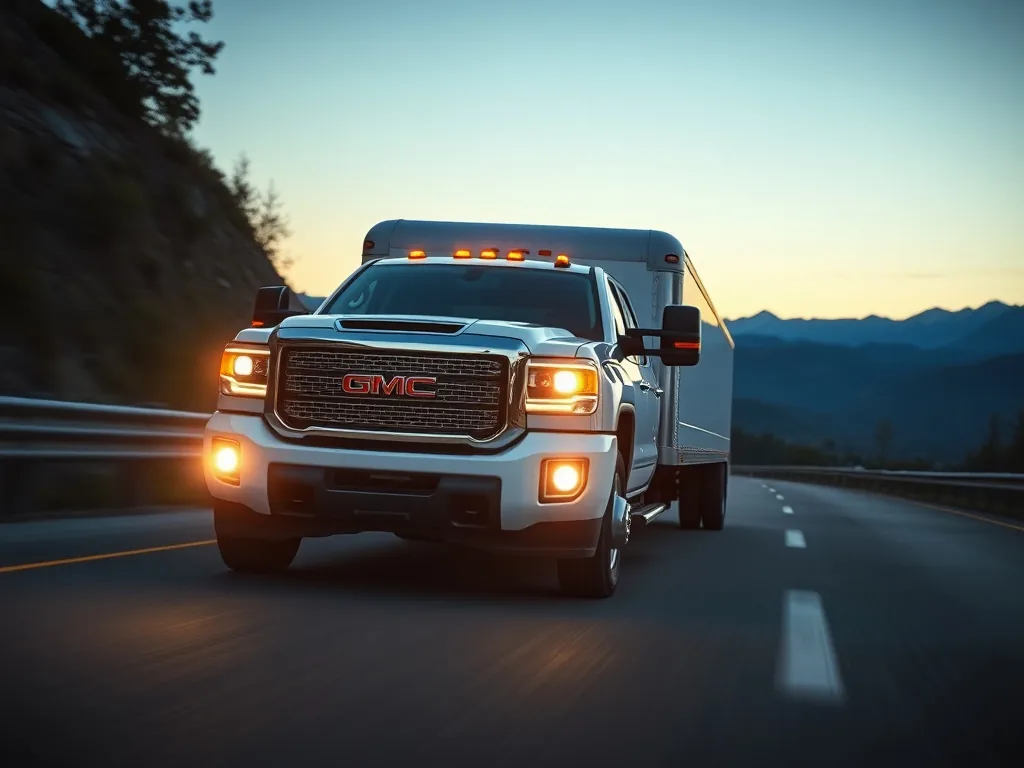
What Primary Liability Covers for Hot Shot Operators
Primary auto liability pays for bodily injury and property damage you cause to other people while operating your rig. Rear-end a minivan on a rain-slick on-ramp with 16,000 lbs of steel behind your dually, and this is the policy that pays their medical bills, their vehicle, and the lawyers — up to your limit.
It applies loaded or empty. Under your own authority, primary liability follows you on deadhead miles between loads, on the run to the shipper, and everywhere in between. That matters in hot shot, where backhauls off rural energy and ag lanes are scarce and deadhead percentage runs high — a coverage that only responded under load would leave half your odometer exposed.
- Bodily injury — medical costs, lost wages, and pain-and-suffering claims from people you injure
- Property damage — the other vehicle, the guardrail, the storefront, the load on the truck you hit
- Legal defense — attorney fees and court costs, which can burn six figures before a verdict ever lands
What it never covers: your own truck, your own trailer, your freight, or your own injuries. Those need physical damage coverage, motor truck cargo, and occupational accident respectively — more on that below.
$750,000 vs $1,000,000: The Legal Minimum vs the Broker Standard
FMCSA requires $750,000 in liability for for-hire interstate carriers hauling non-hazmat freight in vehicles over 10,001 lbs — and virtually every hot shot rig clears that threshold the moment the gooseneck is hitched. But federal legality and bookable freight are two different things.
Nearly every broker posting loads on DAT and Truckstop has shipper contracts requiring their carriers to hold $1,000,000. Send a $750k certificate and your packet gets rejected — the load goes to the next truck. The premium difference between $750k and $1M is usually small, so carrying the full million is one of the easiest business decisions in trucking.
| Limit | Who accepts it | The reality |
|---|---|---|
| $750,000 | FMCSA (non-hazmat, interstate) | Legally compliant, but most broker packets bounce it |
| $1,000,000 | FMCSA + nearly all brokers and load boards | The de facto standard — carry this |
| $1M + $100k cargo | The full carrier-packet ask | Pair with motor truck cargo coverage and rejections mostly disappear |
FMCSA Filings Explained: BMC-91 and the MCS-90 Endorsement
Your MC number does not go active because you bought insurance — it goes active because your insurer filed proof of it with FMCSA. That filing is the BMC-91 (or BMC-91X), and it is the last gate between an application and an operating authority.
The MCS-90 endorsement rides on the policy itself. It is a federal guarantee that the public gets paid after an accident even if the policy would otherwise exclude the loss. Every for-hire interstate carrier needs it — including a one-truck, non-CDL hot shot running under 26,001 lbs combined GVWR. Your insurer handles both; you file nothing yourself.
Lapse = revoked authority
If your policy cancels — missed installment, non-renewal, anything — your insurer withdraws the BMC-91 and FMCSA automatically revokes your authority. You are shut down until a new filing lands, and brokers can see the gap on your record. Autopay is not optional in this business.
Just getting your MC number? The filing timeline is the whole game in your first month — our new authority insurance package walks the DOT application, BOC-3, and BMC-91 sequence step by step.
What Primary Liability Costs on a Hot Shot Authority
Primary liability is your biggest line item — typically 60-70% of the total premium. Full hot shot packages run $7,000-$30,000 per year: most experienced CDL operators with clean records land at $9,000-$19,000, while new-venture non-CDL authorities see $12,000-$26,000. The liability line drives most of that spread.
Why so much for a pickup? Underwriters do not rate a pickup. They rate a 14,000 lb dually pulling a loaded 40-foot gooseneck at 70 mph under a for-hire federal filing — a combination that stops nothing like the truck in your neighbor's driveway. Loss severity looks closer to light Class 8 than personal auto, and premiums follow severity.
- Authority age — the first 12-24 months carry a new-venture surcharge that fades after a clean year
- Your MVR — one at-fault or one serious violation moves the number more than any other single factor
- Radius — 500+ mile expedited lanes rate higher than a 150-mile local operation
- Age and experience — under-25 drivers and thin commercial history narrow your markets and raise the price
- Garaging ZIP — the same rig costs different money in Houston than in rural Oklahoma
The good news hides in the first bullet: the new-venture surcharge is temporary. Survive 6-12 months without a claim or a filing lapse and renewal pricing drops meaningfully, partly because more carriers will quote you once you are no longer a brand-new MC. Year one is the toll booth — pay it once, cleanly, and the road gets cheaper.
Expect 15-25% down with the balance financed monthly. For the full premium picture — with worked sample quotes — see our 2026 hot shot insurance cost guide.
Your Truck and Trailer as One Insured Unit
Liability follows the power unit, so damage your trailer causes to others is covered while it is attached — but only if the trailer is scheduled on the policy. An unscheduled gooseneck is one of the most common ways hot shot claims go sideways.
When you get quoted, the underwriter wants the trailer's specs the same as the truck's: type (gooseneck, deckover, dovetail, bumper-pull), length, GVWR, and VIN. Swap trailers or add a second one mid-year? Call your agent before the next load, not after the incident.
Radius gets rated at the unit level too. Plenty of hot shots run 500-plus-mile expedited lanes — that is the business model — and underwriters price those bands differently than a 150-mile local operator. Declare your real radius. Getting caught running Laredo to Denver on a policy rated for local work is a claim-denial fight you will not win.
Remember the distinction: liability covers what the trailer does to others. Damage to the trailer itself — theft from a yard, hail, a jackknife backing at a shipper — is a physical damage claim, scheduled at the trailer's own stated value.
What Primary Liability Does NOT Cover
The most expensive myth in this niche is "my personal Progressive policy covers my truck." Personal auto excludes for-hire commercial use — haul one paid load and a claim can be denied outright, leaving you personally exposed on a six-figure loss. But even a proper commercial liability policy has hard edges:
- Your truck and trailer — that is physical damage coverage, and your lender requires it on financed equipment
- The freight on your deck — a snapped strap or torn tarp is a cargo insurance claim
- You — your injuries, your lost income; that is occupational accident territory
- Off-dispatch driving when leased on — a carrier's primary liability only applies under dispatch; bobtail and non-trucking liability fills the gap on personal and deadhead miles
Under your own authority, your primary liability covers deadhead — but confirm it in writing. A few cut-rate forms rate only loaded miles, and in hot shot that gap is enormous.
Get a Liability Quote With Same-Day FMCSA Filing
We write hot shot liability all day: duallys, goosenecks, CDL and non-CDL, brand-new MC numbers and ten-year authorities. Quotes come back fast, BMC-91 filings go out same day, and broker-specific COIs do not sit in a queue while your load ages off the board.
Have your VIN, trailer specs, MVR, radius, and commodity list ready and start your quote — or call 844-967-5247 and talk to someone who knows what a deckover is. If the filing needs to hit FMCSA today, say so up front and we will move it to the front of the line.