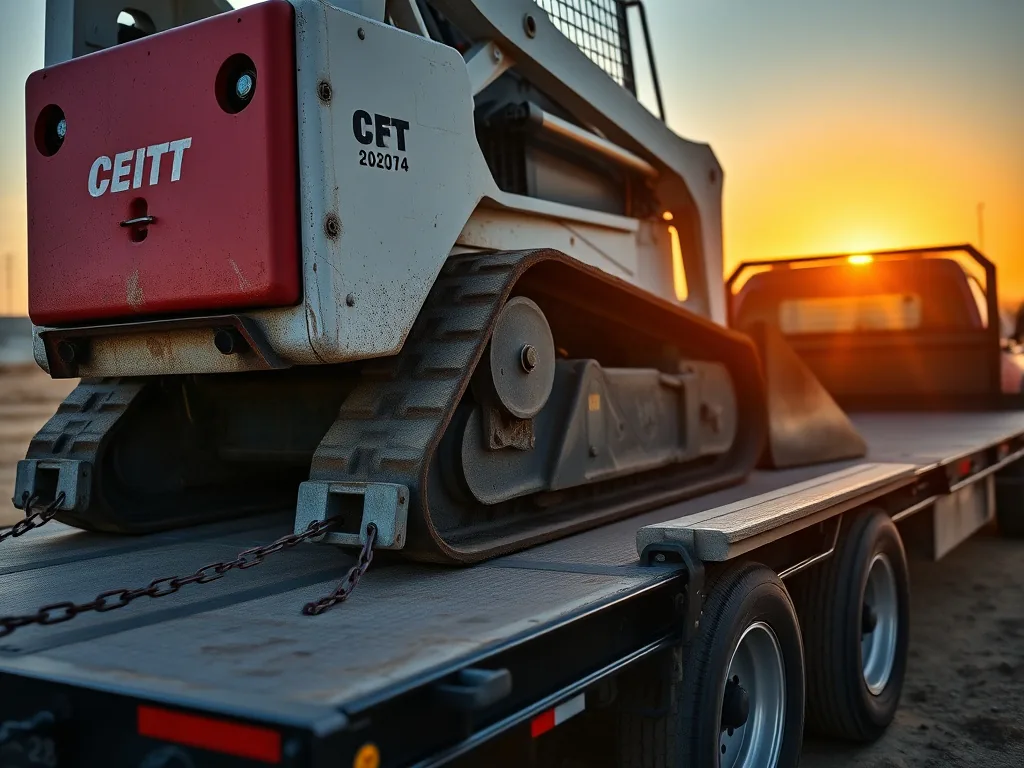
What Motor Truck Cargo Covers on a Hot Shot Trailer
Motor truck cargo insurance pays for damage to the freight you are hauling while it is in your care, custody, and control — from the moment it is loaded on your deck to the moment it is signed for at delivery. The skid steer that shifts and drops, the pallet crushed in a wreck, the load soaked when a tarp tears at 70 mph: cargo claims, all of them.
It is a different policy from primary liability, which pays people you hurt, and from physical damage, which pays for your own truck and trailer. Cargo covers the one thing on your rig that belongs to somebody else — and that somebody's broker will absolutely file against you if it arrives broken.
- Collision and overturn — freight destroyed when the rig wrecks
- Load shift and securement failure — the classic open-deck loss
- Fire, theft, and vandalism — subject to the policy's security conditions
- Water and weather damage — torn tarps, storm soaking on covered commodities
- Debris removal and cleanup — getting a spilled load off the highway is on you, and good forms cover it
Why $100,000 Is the Load-Board Standard
FMCSA dropped the federal cargo-filing requirement for general freight back in 2012 — so legally, cargo insurance is optional. Practically, it is the least optional coverage you will buy: nearly every broker on DAT and Truckstop requires a $100,000 cargo certificate in their carrier packet before they will dispatch you a single load.
The boards themselves only verify your authority is active. The broker's packet is the real gate, and it wants $1M auto liability plus $100k cargo, with the broker listed as certificate holder. Show up with $50k cargo to save a few hundred a year and you have locked yourself out of most of the freight on the board.
Hauling higher-value equipment lanes? Some brokers ask for $150k-$250k on specific loads. Better to know your form's limit and your commodity list before you bid than to bounce a packet after you have booked.
The cert details matter as much as the limit: the broker listed as certificate holder, the right legal entity name, an expiration date that clears the load window. A packet bounced on paperwork costs you the same load as a packet bounced on limits — and it happens more often.
Open-Deck Exposures: Tarping, Strapping, and Shifting Loads
Hot shot freight rides on an open deck, and that changes everything about how cargo claims happen. In a dry van, freight mostly gets hurt in a wreck. On a 40-foot gooseneck, a strap failure, a torn tarp, or a shifted load is your claim — no collision required, no act of God to blame.
Underwriters know this, which is why they care how you secure. Grossly inadequate securement can trigger exclusions, and adjusters scrutinize open-deck claims harder than any other kind. The habit that wins disputes is cheap: photograph every load after tie-down and again after tarping, timestamped on your phone. Documented securement is the difference between a paid claim and a fight.
- Check straps at every fuel stop — re-tension and re-shoot a photo if anything moved
- Match securement points to FMCSA minimums for the commodity weight, then add one
- Replace cut or frayed straps immediately; an adjuster will photograph them even if you did not
- Tarp like the tarp will be argued about later, because it will be
Commodity Exclusions That Bite Hot Shots
Here is the trap in cheap cargo forms: the bread-and-butter hot shot load — used farm and construction equipment — is excluded or sub-limited on many of them. The certificate says $100,000, the broker packet clears, and then the claim on a used skid steer comes back denied because the form never covered used machinery in the first place.
| Commodity | Cheap-form treatment | What hot shots need |
|---|---|---|
| Used farm / construction equipment | Often excluded or sub-limited | Explicitly listed — this is core hot shot freight |
| Autos and pickups (hauling cars) | Commonly excluded | A car-hauler endorsement or a form that schedules autos |
| Target commodities (electronics, copper, alcohol) | Excluded or heavy theft conditions | Declare them or decline the loads |
| General freight, building materials, machinery on skids | Covered on most forms | Confirm limits match the invoice values you actually haul |
The rule: your commodity list should match what you actually book off the load boards. Never book an excluded commodity hoping nobody notices — the time somebody notices is claim time.
Theft and the Unattended-Vehicle Clause
Overnight layovers are hot shot reality — expedited freight does not always deliver in one hop, and a skid steer chained to your deck at a motel is exactly the scenario cargo thieves look for. Whether that theft pays depends on your form's unattended-vehicle clause.
Read the theft conditions before the layover, not after
Most cargo forms only pay theft claims if the rig was locked, and many require it parked in a secured, fenced, or well-lit area. Some void theft coverage entirely for loads left unattended overnight. Know your form's exact wording — and build parking habits around it. Better parking discipline also earns better cargo terms at renewal.
Time-sensitive freight adds one more wrinkle: cargo insurance pays for physical loss or damage to the freight, not late-delivery penalties. A missed hot-load window is a business problem, not a covered one — and no, there is no reefer breakdown coverage to worry about on a flatbed.
Deductibles and How Cargo Claims Actually Pay
Most hot shot cargo policies carry a $1,000-$2,500 deductible. When a covered loss lands, the claim pays the invoice value of the freight — what the shipper sold it for, not retail, not replacement — minus your deductible, up to your limit.
Good forms add the expenses that pile up around a loss: debris removal when a load hits the pavement, freight charges you have to eat, sometimes pollutant cleanup from hydraulic fluid. Cheap forms make those your problem. Ask what rides along with the limit, not just what the limit is.
- Secure the scene and photograph everything — load, securement, damage, roadway
- Notify your agent and the broker the same day; late notice is a fight you do not need
- Collect the bill of lading, rate confirmation, and the shipper's invoice showing freight value
- Do not sign anything accepting fault or agreeing to deductions until the adjuster has the file
What Hot Shot Cargo Coverage Costs
At the standard $100,000 limit, hot shot cargo typically runs $1,200-$3,000 per year — a modest slice of a full package that lands between $7,000 and $30,000 annually. Where you fall in the range comes down to commodities, radius, deductible, and years of authority.
- Commodity list — used equipment and autos price higher than general freight
- Radius — long expedited lanes mean more overnight exposure
- Deductible — $2,500 instead of $1,000 trims the premium
- Authority age and loss history — new ventures and prior cargo claims pay more
Do not shave the limit to save money — a $50k cert locks you out of broker packets and costs you more in lost loads than it saves in premium. The smarter levers are deductible and an honest commodity list. Full package math with worked examples is in the 2026 cost guide.
Get a Cargo Quote That Brokers Accept
The top reason hot shots lose a booked load is a bad cert: wrong limit, missing certificate holder, or an excluded commodity for that freight. We write cargo forms matched to what you actually haul — used equipment included — and issue broker-specific COIs same day, so the packet clears while the load is still yours.
Requirements to get and stay load-board approved are covered in our broker and load board requirements guide. Ready to price it? Start your quote or call 844-967-5247 with your commodity list handy.