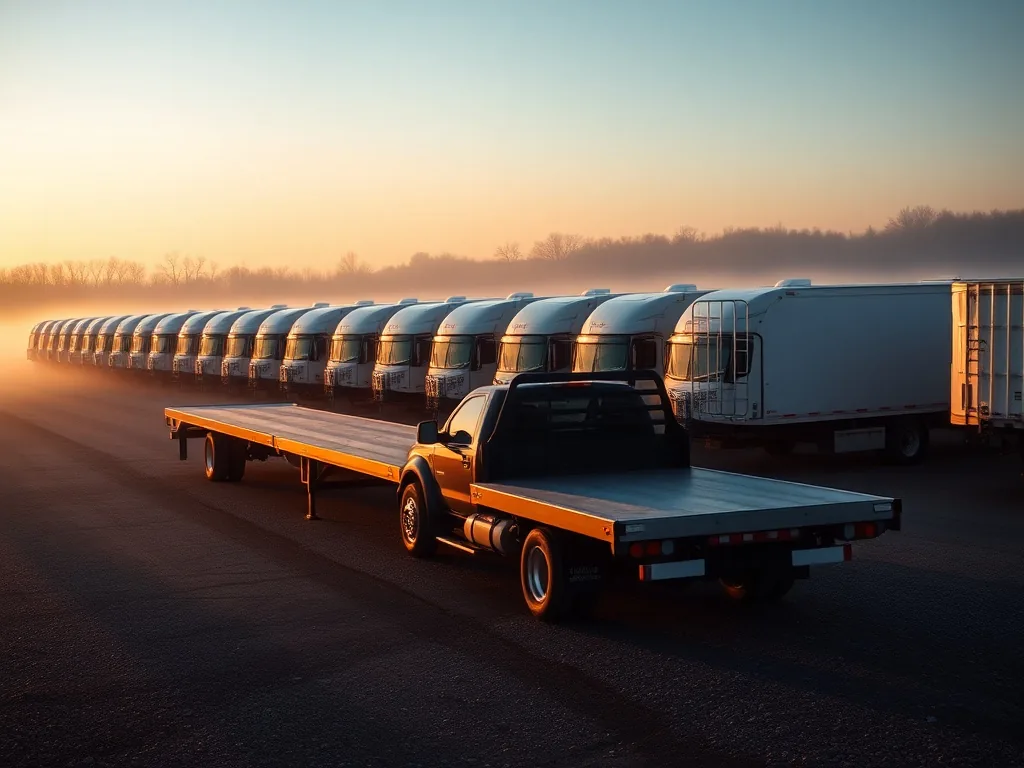
What Trailer Interchange Insurance Actually Covers
Trailer interchange insurance pays for physical damage to a trailer you don't own while it's in your possession under a written interchange agreement. Collision, fire, theft, vandalism — the same perils your own physical damage policy covers on your equipment, applied to somebody else's trailer.
The key phrase is *written interchange agreement*. True trailer interchange is a legal arrangement built for the container and drop-lot world, where carriers swap trailers under UIIA-style contracts. If there's no signed agreement, a classic trailer interchange policy can deny the claim outright — even though you were clearly hauling the trailer when it got hurt.
That's why most hot shots who ask for "trailer interchange" actually need a related but different product: non-owned trailer physical damage. It covers damage to a trailer in your care, custody, and control whether or not a formal interchange contract exists. Same job, fewer landmines.
Trailer Interchange vs Non-Owned Trailer Coverage
Agents who mostly write semis will quote you interchange by default because that's what Class 8 fleets buy. For a dually pulling somebody else's gooseneck, the fit is usually wrong. Here's the difference in plain terms:
| Trailer Interchange | Non-Owned Trailer PD | |
|---|---|---|
| Written agreement required? | Yes — no signed interchange agreement, no coverage | No — covers trailers in your care, custody, and control |
| Built for | Container/drop-yard swaps between carriers (UIIA world) | Power-only loads, borrowed and dealer-owned trailers |
| Typical hot shot fit | Rare — most hot shot hauls have no interchange contract | The right product for most hot shot operations |
| Typical limits | $20,000–$50,000 | $20,000–$50,000 |
If a shipper or lease-on program hands you a document titled "Trailer Interchange Agreement" and requires that exact coverage, buy that exact coverage. Otherwise, non-owned trailer physical damage is almost always what a hot shot needs. We'll read the requirement sheet with you before we quote it — the wrong product at the right limit is still a denied claim.
Power-Only Loads: The Fast-Growing Reason Hot Shots Need This
Power-only is one of the fastest-growing segments in the hot shot world. New RVs and campers from the factory to dealers. Dealer-owned goosenecks pre-loaded and waiting in a yard. Drop trailers a broker stages so you hook, haul, and drop. In every one of those loads, the trailer belongs to someone else — and the agreement you signed makes you responsible for it from hook to drop.
Here's the trap: your physical damage policy covers scheduled equipment — the truck and trailer listed on your dec page at stated values. A dealer's $28,000 gooseneck isn't on your schedule, so a jackknife, a hail storm, or a theft while it's hooked to your truck pays exactly nothing from your own policy. Your motor truck cargo coverage doesn't help either — cargo covers the freight ON the trailer, never the trailer itself.
- RV transport: most RV-hauling programs mandate a specific non-owned trailer limit before they'll lease you on. Bring their requirement sheet to the quote — we write to it exactly.
- Dealer and drop trailers: brokers running drop-and-hook freight increasingly require proof of non-owned trailer coverage in the carrier packet, right next to your $1M liability and $100k cargo certs.
- The borrowed dovetail: grabbing a buddy's trailer for one oversized skid-steer load feels harmless — until it's damaged and you owe him a trailer out of pocket.
One habit that pays for itself: photograph every non-owned trailer at hook and at drop — deck, tires, lights, corners. Pre-existing damage disputes are the ugliest part of power-only work, and thirty seconds of phone photos settles most of them before they start.
How Much Coverage to Carry
Set the limit to the real replacement value of the most expensive trailer you'll realistically pull. For the gooseneck, deckover, and flatbed trailers common in hot shot work, $20,000–$50,000 covers nearly everything on the road. A used 40-foot gooseneck might replace at $18,000–$25,000; a new triple-axle deckover or an enclosed car hauler can push past $40,000.
Two numbers to check before you bind: the limit and the deductible. A $1,000 deductible is standard; raising it to $2,500 shaves a little premium but stings on a small claim. And if a lease-on program specifies a minimum limit, treat it as a floor, not a target — programs set minimums for their cheapest trailer, not their newest one.
The certificate detail that gets hot shots rejected
Power-only programs don't just want the coverage — they want to see "non-owned trailer" or "trailer interchange" named on the certificate with the limit spelled out. A COI showing only liability and cargo gets kicked back, and a kicked-back packet is a lost load. Tell us who needs the cert and we'll issue it same-day with the exact wording their packet requires.
What It Costs — and When You Can Skip It
Good news for once: this is one of the cheapest lines on a hot shot policy. Non-owned trailer coverage at typical limits usually adds a few hundred dollars a year — a rounding error next to your liability premium, and less than the deductible you'd eat on a single claim.
When can you skip it? If you own every trailer you pull, never book power-only freight, and never borrow equipment, you don't need it — put the money toward your own equipment values instead. But be honest about the word *never*. The whole appeal of power-only is grabbing a good-paying load on a slow week, and the week you finally do it is the week the coverage isn't there.
Running two or more trucks changes the math again. Fleets mixing owned and non-owned trailers across multiple power units should look at how hot shot fleet policies schedule trailers — an "any owned trailer" endorsement plus a non-owned trailer limit per unit is usually cleaner than listing every combination.
One underwriting note: carriers will ask what percentage of your loads are power-only. Answer honestly. An operator who says "almost never" and then runs three RV deliveries a week is set up for a coverage dispute — and a fair answer usually costs less than you'd guess anyway.
How Hot Shots Get Burned Without It
These are the patterns we see, over and over, from operators who called us after the loss instead of before. In every case the fix would have cost less than one truck payment; the loss cost a season's profit:
- The RV delivery gone wrong. A brand-new fifth wheel clips a low overhang on a dealer lot. The transport agreement makes the driver liable for the full $65,000 unit — and his policy schedule shows one truck, one owned gooseneck, nothing else.
- The dropped dealer trailer. A dealer-owned gooseneck left at a pickup yard over the weekend disappears. Theft of a non-owned, unattended trailer is exactly what this endorsement handles — and exactly what nothing else on the policy touches.
- The one-time borrow. An oversized load needs a dovetail, a friend has one, the load pays great. A blown tire puts the trailer into a guardrail, and a friendship gets settled in small-claims court.
- The wrong-product denial. An operator bought classic trailer interchange to satisfy a program, hauled for a broker with no interchange agreement in place, and had the claim denied on the paperwork technicality. The right form matters as much as the limit.
Add Non-Owned Trailer Coverage to Your Quote
This endorsement takes minutes to add and one requirement sheet to get right. Tell us what you pull, who owns it, and which programs you're signing on with — we'll match the product, the limit, and the certificate wording so your packet clears the first time. If you're still building the rest of the stack, our broker and load board requirements guide walks through everything a carrier packet asks for.
Get your hot shot quote online, or call 844-967-5247 and talk to someone who knows what a power-only packet looks like. Josh reads the fine print so you don't find it in a denial letter.