What Makes Hot Shot Insurance Different from Regular Truck Insurance
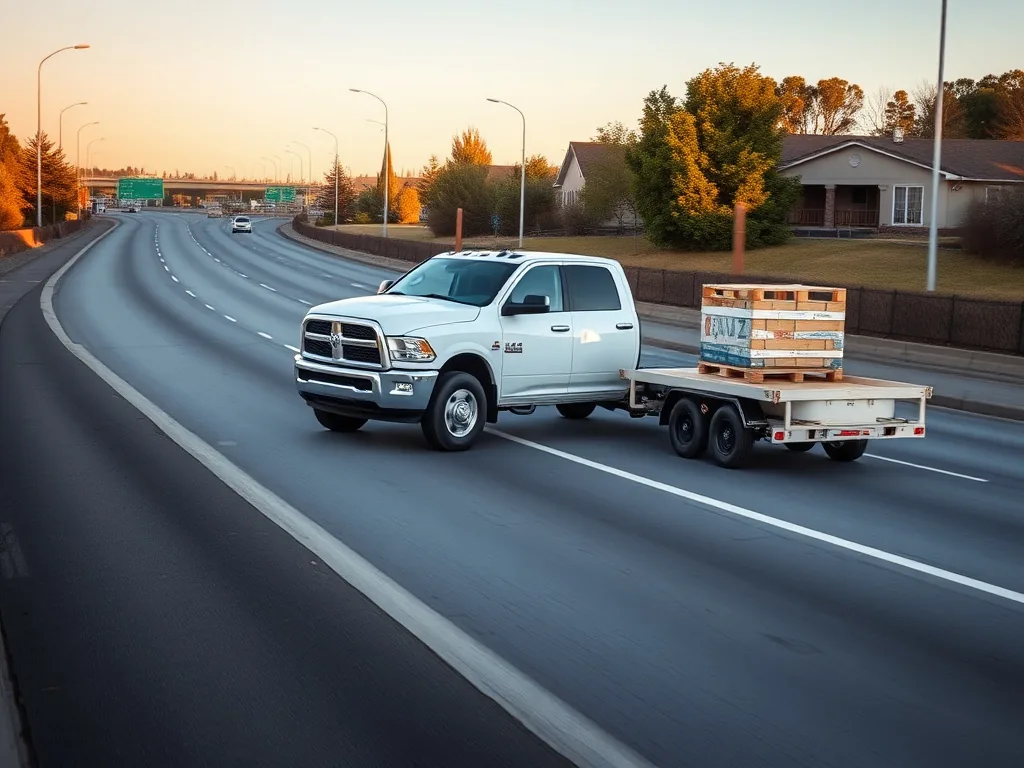
On paper you drive a pickup. To an underwriter, you drive a 14,000-lb dually pulling a loaded 40-foot gooseneck at highway speed, for hire, under a federal motor carrier authority, with a $750,000 liability filing behind it. That combination stops nothing like a pickup and claims nothing like a pickup — so insurers rate hot shot trucking in its own lane, somewhere between personal auto and light Class 8.
That's why the same Ram 3500 that costs $200 a month on a personal policy costs $900-$1,500 a month the day you start hauling paid freight. It's also why the most expensive assumption in this business is "my personal Progressive policy covers my truck." It doesn't. Personal auto policies exclude for-hire use, and hauling one paid load can void a claim entirely — leaving you personally holding a six-figure liability loss.
Hot shot is also the only trucking segment where the power unit doubles as the family truck. Your work rig is your grocery-store rig, which creates coverage-boundary questions a semi driver never faces. A properly written hot shot policy accounts for all of it — dispatch miles, deadhead miles, and the Saturday dump run.
Hot Shot Insurance Cost in 2026: The Real Numbers
Here's the answer every other site makes you fill out a form to get. Hot shot operators running under their own authority pay roughly $7,000-$30,000 per year ($600-$2,500 per month) for the full package: $1M auto liability, $100k motor truck cargo, and physical damage on the truck and trailer. Where you land in that spread depends on the factors covered below — but the ranges by profile are consistent:
| Operator profile | Typical annual premium | Typical monthly |
|---|---|---|
| New authority, non-CDL, clean MVR | $12,000-$26,000 | $1,000-$2,200 |
| New authority, full package, clean record | $8,000-$15,000 | $700-$1,250 |
| Experienced CDL owner-operator, 2+ yrs authority | $9,000-$19,000 | $750-$1,600 |
| Leased onto a carrier (bobtail/NTL + physical damage) | $3,000-$5,000 | $250-$420 |
Two things jump out. First, the single biggest premium factor isn't your truck — it's whether your MC number is new. First-year authorities carry a surcharge that burns off after 6-12 clean months. Second, leasing onto an established carrier costs a fraction of running your own authority, because the carrier's policy handles primary liability and cargo while you're under dispatch.
Why every site quotes a different number
You'll see figures online from $388 a year to $30,000 a year for "hot shot insurance." They're describing different things — a standalone general liability policy versus a full own-authority package. The table above compares complete, broker-ready packages, which is the number that actually matters when you're budgeting.
Coverage-by-Coverage: What Each Policy Does and What It Costs
A broker-ready hot shot package stacks four to six coverages. Here's each line item, what it protects, and what it typically runs in 2026:
| Coverage | What it pays for | Typical cost |
|---|---|---|
| Primary auto liability ($1M) | Injuries and property damage you cause to others — loaded, empty, or deadheading under your authority | 60-70% of your total premium |
| Motor truck cargo ($100k) | Damage or theft of the freight on your deck — strap failures, torn tarps, load shift, wrecks | $1,200-$3,000/yr |
| Physical damage | Collision and comprehensive on your dually AND your trailer, each at stated value | 3-5% of truck + trailer value per year |
| Bobtail / non-trucking liability | Liability when you're off dispatch — mainly for leased-on operators and personal use | $30-$50/mo |
| Occupational accident | Your medical bills and lost income after a tarping fall or securement injury — you have no workers' comp | $120-$250/mo |
| Trailer interchange / non-owned trailer | Physical damage to a trailer you pull but don't own — power-only and RV transport loads | Varies by limit; often a few hundred/yr |
Liability is the monster line. If your quote feels high, that's where the money is — and it's also where the new-authority surcharge lives. Cargo and physical damage are comparatively stable; they price off your commodity list and equipment values, not your MC age.
Why Quotes Vary 10x: The Factors That Set Your Premium
Two hot shots with identical trucks can get quotes $15,000 apart, and neither quote is wrong. Underwriters price the operation, not the truck. Here's what moves the number, ranked roughly by weight:
| Factor | Impact | What underwriters want to see |
|---|---|---|
| Authority age | Highest — new ventures pay the most for 12-24 months | 12+ clean months under your own MC |
| Driver MVR | High — one recent at-fault or major violation can double liability | Clean 3-year record, no majors in 5 |
| Driver age & experience | High — under-23 drivers have few markets and steep surcharges | 23+, with 2+ years verifiable commercial driving |
| Radius of operation | Moderate-high — 500+ mile expedited lanes rate above regional | Honest radius; don't pay for miles you don't run |
| Garaging state & ZIP | Moderate — venue risk and storm exposure vary widely | Nothing you can change; just know it matters |
| Truck + trailer value | Moderate — physical damage runs 3-5% of stated value | Accurate stated values, not inflated ones |
| Commodities hauled | Moderate — autos and used equipment need the right cargo form | A commodity list that matches your actual lanes |
| Limits & deductibles | Lower — $750k vs $1M liability is a small delta | Carry $1M; brokers reject $750k certs anyway |
| Credit & payment history | Lower — but lapses and cancellations haunt future quotes | Autopay, never let the policy lapse |
Notice what's NOT high on the list: the badge on your hood. A Ram versus a Ford changes almost nothing. A 24-year-old with a fresh MC versus a 45-year-old with three clean years changes everything.
FMCSA Requirements vs What Brokers Actually Demand
Federal law and the freight market ask for two different things, and you need to satisfy both. FMCSA requires $750,000 of auto liability for for-hire interstate carriers running non-hazmat freight in vehicles over 10,001 lbs. Your insurer proves it by filing a BMC-91 or BMC-91X directly with FMCSA, and your policy carries an MCS-90 endorsement guaranteeing the public gets paid after an accident. No filing, no active authority — and if the filing ever drops, FMCSA revokes your authority automatically.
The market asks for more. Nearly every broker posting loads on DAT or Truckstop requires $1,000,000 auto liability and $100,000 cargo in their carrier packet, because their shipper contracts demand it. A $750k certificate is federally legal and commercially useless — brokers will reject your packet and the load goes to the next truck. The price difference between $750k and $1M is small; carry the million.
Cargo is the quiet one: FMCSA dropped the federal cargo-filing requirement for general freight back in 2012, so the $100k standard is purely market-driven. It's also non-negotiable if you want to book loads. Setting up all of this correctly on day one is exactly what a new authority insurance package is for.
Non-CDL vs CDL Hot Shot: Does It Change the Price?
Short answer: barely. If your combined GVWR — truck rating plus trailer rating — stays under 26,001 lbs, you can run without a CDL. But once you're over 10,001 lbs and hauling for hire across state lines, the same FMCSA liability minimum, the same BMC-91 filing, the same medical card, and the same $1M/$100k broker expectations apply. Insurers price the exposure, and the exposure is nearly identical.
Some underwriters actually view CDL holders as slightly better risks — the license signals training and opens more carrier markets. So non-CDL saves you licensing time and hassle, not premium. The full math on the 26,001-lb rule, including a worked truck-plus-trailer example, is in our non-CDL hot shot insurance guide.
Sample Quote #1: New Authority, Non-CDL, First Truck
Numbers in the abstract don't help you budget, so here are three realistic scenarios built the way an agent actually builds them. First: the most common caller we hear from. Profile: 26-year-old in Georgia, brand-new MC number, clean MVR, no prior commercial experience. 2023 Ram 3500 dually (financed, $62,000 stated value) with a new 14k GVWR 40' gooseneck ($16,000). Combined GVWR under 26,001 — non-CDL. General freight off the load boards, 500-mile radius.
| Line item | Limit / basis | Annual premium |
|---|---|---|
| Primary auto liability | $1,000,000 CSL + BMC-91 filing + MCS-90 | $9,800 |
| Motor truck cargo | $100,000 limit, $1,000 deductible | $2,400 |
| Physical damage — truck + trailer | $78,000 stated value @ ~4.5% | $3,510 |
| Total year-one package | $15,710 |
Payment reality: 20% down is about $3,142, followed by nine monthly installments around $1,395. That lands mid-range for a new-venture non-CDL operation ($12,000-$26,000) — the new-authority surcharge and the driver's thin commercial history are doing most of the damage, and both fade with a clean first year.
Sample Quote #2: Experienced CDL Owner-Operator
Profile: 41-year-old in Texas, Class A CDL, three years under his own authority, zero claims, clean MVR. 2021 F-350 dually (paid off, $52,000 stated value) with a 40' deckover ($18,000). Oilfield and construction equipment, 500-mile radius, documented securement habits.
| Line item | Limit / basis | Annual premium |
|---|---|---|
| Primary auto liability | $1,000,000 CSL + BMC-91 filing + MCS-90 | $7,200 |
| Motor truck cargo | $100,000 limit, used-equipment endorsement | $1,650 |
| Physical damage — truck + trailer | $70,000 stated value @ ~3.5% | $2,450 |
| Total annual package | $11,300 |
Same coverage stack as Scenario 1, roughly $4,400 less per year — and every dollar of the difference is history, not hardware. Three clean years bought him a lower liability rate, a better physical damage percentage, and access to carriers that won't touch a new venture. This is the quote Scenario 1 grows into. It sits comfortably inside the $9,000-$19,000 experienced-CDL range.
Sample Quote #3: Leased Onto a Carrier
Profile: 34-year-old in Ohio, leased onto an established motor carrier hauling under their MC. The carrier's policy covers primary liability and cargo while he's under dispatch — so he only buys the coverage that follows HIM: physical damage on his own rig, liability for off-dispatch miles, and injury protection.
| Line item | Limit / basis | Annual premium |
|---|---|---|
| Physical damage — truck + trailer | $55,000 stated value @ ~4% | $2,200 |
| Bobtail / non-trucking liability | $1,000,000, off-dispatch miles | $480 |
| Occupational accident | Disability income + medical + AD&D | $1,680 |
| Total annual package | $4,360 |
About $363 a month — a fraction of own-authority cost, right in the canonical $3,000-$5,000 leased-on range. The trade is control and rate-per-mile: the carrier takes its cut. But for a first-year driver staring at a $15,000+ new-authority quote, leasing on while the surcharge window burns off is a legitimate strategy, not a failure. Just understand the gap you're buying bobtail/NTL coverage to fill: the carrier's policy only covers you under dispatch.
Down Payments, Monthly Installments, and the Lapse Trap
Almost nobody writes a check for the full annual premium. Hot shot policies are premium-financed: you put 15-25% down and pay the balance over nine or ten monthly installments, plus finance charges. On a typical new-authority package that means $1,500-$3,500 up front — budget for it alongside the truck payment, the trailer, and your first month of fuel, because you cannot book a single load without the policy active and filed.
Paying in full usually earns a discount and kills the finance charges. If you finance, put the installment on autopay and treat it as sacred. A missed payment cancels the policy; a cancelled policy drops your BMC-91 filing; a dropped filing means FMCSA revokes your authority — and now you're reinstating an MC number, explaining a lapse to every future underwriter, and watching your board go quiet mid-season. The lapse costs far more than the installment ever did.
How to Actually Lower Your Hot Shot Insurance Costs
Forget coupon-style tricks. The levers that genuinely move a hot shot premium are operational:
- Survive year one clean. The new-authority surcharge fading is the biggest single discount you will ever get — renewals after a claim-free first year commonly drop 15-30%.
- Fix the MVR before you quote. Handle open tickets, take the deferral, let violations age past the 3-year window when you can. One major violation prices worse than five years of experience prices well.
- Right-size your stated values. Physical damage runs 3-5% of stated value — insuring a $52k truck as a $70k truck buys you nothing but premium.
- Raise deductibles only with a reserve behind them. Moving from $1,000 to $2,500 cuts premium, but only makes sense if $2,500 doesn't end your week.
- Tighten radius and commodity list to what you actually run. Don't pay for auto-hauling capacity or 48-state radius you never use — and never lie the other direction, because misrepresented radius kills claims.
- Run a dashcam. Telematics credits are real but modest; the real value is footage that kills a not-at-fault claim before it prices your renewal.
- Bundle the package with one trucking-niche agency. Mono-line policies stacked across three carriers cost more than one packaged account, and one agent means one call for every COI.
- Shop at renewal, not mid-term. Mid-term cancellations trigger penalties and look bad on your record. Line up competing quotes 30-45 days before renewal instead.
And one anti-lever: never drop cargo below $100k or quietly reduce liability to $750k to save money. The savings are small and the cost is every load a broker won't tender you.
Claims: What Actually Happens When Something Goes Wrong
Premiums are what you pay; claims are what you paid for. A cargo claim on a hot shot usually starts with securement — a strap failure, a torn tarp, a shifted skid steer. Your cargo policy pays the invoice value of the damaged freight minus your deductible, but open-deck claims get scrutinized, and the difference between a paid claim and a fight is usually documentation. Photograph every load after tie-down and after tarping, every time. It takes ninety seconds and it wins arguments.
Physical damage claims are more straightforward — deer strike on a night run, hail on an exposed truck, a jackknifed gooseneck backing at a shipper — but remember the trailer must be scheduled on the policy at its own stated value. An unscheduled trailer is the most common uncovered loss in hot shot. Liability claims are the serious ones: your insurer defends and pays third parties up to your $1M limit, and the MCS-90 endorsement backstops the public even where the policy would otherwise exclude. That backstop is why FMCSA requires it — and why insurers can come back to you for reimbursement after an MCS-90 payout, which is one more reason to keep your operation inside what your policy actually covers.
The First-Year Cliff: When Hot Shot Insurance Gets Cheaper
New-venture pricing isn't forever — it's a probation period. Carriers price first-year authorities at the top of the range because they have no data on you; most new MCs that fail, fail fast. Give them 6-12 months of clean operation and the picture flips: more carriers will quote you, and competition plus a track record pulls the number down.
Practically, that means your job in year one is boring: no claims, no lapses, no violations, autopay on. Document your securement with photos on every load. Keep your FMCSA scores clean. Then, at your first renewal, make your agent re-shop the account — that's when the $15,710 quote from Scenario 1 starts walking toward the $11,300 in Scenario 2. Ready for a real number instead of a range? Get a hot shot quote and we'll build your package line by line, same-day BMC-91 filing included.
Frequently Asked Questions
Most hot shot operators under their own authority pay $600-$2,500 per month, with the full package (liability, cargo, physical damage) landing between $7,000 and $30,000 per year. New authorities with clean records commonly see $8,000-$15,000 in year one, while leased-on operators pay $250-$420 a month for their lighter package.
Insurers don't rate you as a pickup — they rate a 14,000-lb dually pulling a loaded 40' gooseneck at highway speed under a for-hire federal authority, with a $750,000+ liability filing behind it. Loss severity looks more like light Class 8 than personal auto, which is why the same truck costs $200 a month personally and $1,200 a month commercially.
Plan on 15-25% of the annual premium up front — roughly $1,500-$3,500 on a typical new-authority package — with the balance financed over nine or ten monthly installments. Paying in full usually earns a discount and avoids finance charges.
Yes. The new-authority surcharge is the single biggest premium factor, and it fades after 6-12 months of clean operation. Claim-free renewals commonly drop 15-30%, partly because more carriers will quote you once you're no longer a new venture.
$750,000 satisfies FMCSA for non-hazmat freight, but most brokers' shipper contracts require $1M, so a $750k certificate gets your packet rejected on the load boards. The price difference is usually small — carry $1M.
Not meaningfully. Over 10,001 lbs and for-hire interstate, the same FMCSA requirements and $1M/$100k broker expectations apply either way, and underwriters price the exposure, not the license. Staying under 26,001 lbs combined GVWR saves licensing hassle, not premium.