The 26,001-lb Rule: How Combined GVWR Actually Works
The CDL line is drawn at 26,001 lbs of combined GVWR — and the word that trips everybody up is rating. It's not what your rig weighs on the scale today. It's the truck's GVWR sticker plus the trailer's GVWR sticker, added together. Run empty all year with a heavy-rated trailer and you're still a CDL combination, because the ratings say you could be heavy.
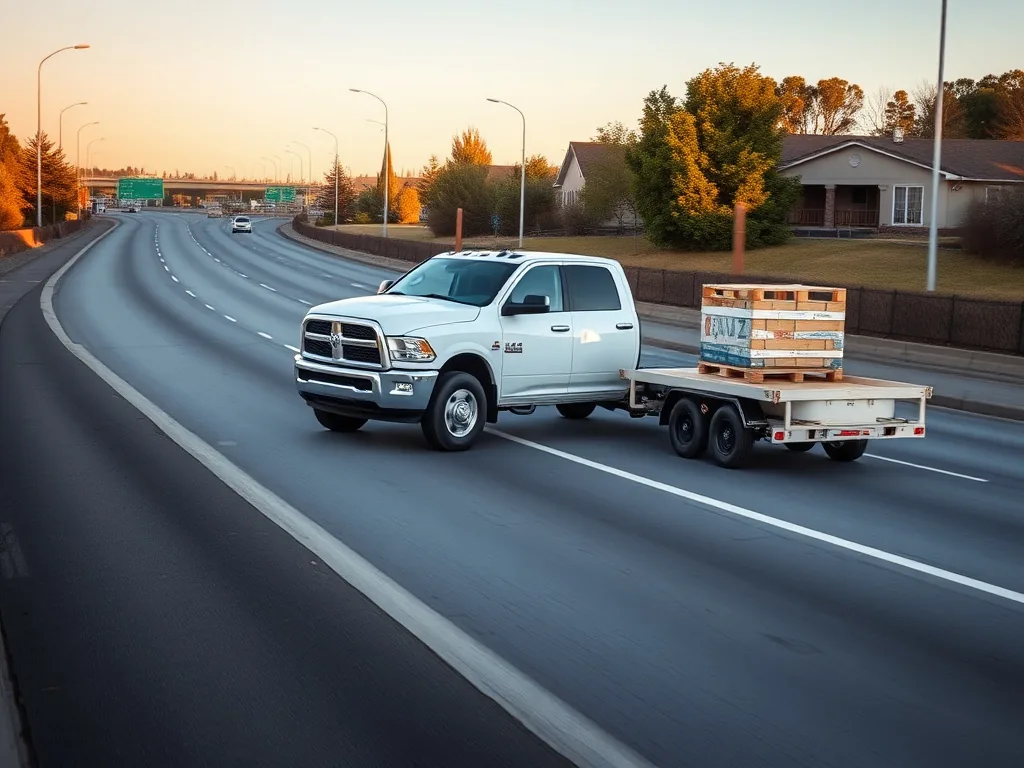
Here's the math on a real setup. A 2023 Ram 3500 dually carries a GVWR of about 12,300 lbs. Hook it to a gooseneck rated at 14,000 lbs and your combined GVWR is 26,300 — over the line, CDL required, even bobtailing to the diesel pump. Swap that for a trailer rated at 13,700 lbs or less and the same truck sits at 26,000 or under: legal non-CDL. This is why non-CDL hot shot trailers are ordered with de-rated axles — the sticker is the whole game.
One more wrinkle: if the trailer's GVWR is over 10,000 lbs, the combination generally needs a Class A CDL once you cross 26,001 combined. There's no "but it was empty" defense at the scale house, and there's no such defense with your insurer either — misstating your GVWR combo on the application is a claim-denial waiting to happen.
Non-CDL Does Not Mean Non-Regulated
The most expensive myth in this segment is that skipping the CDL means skipping the rules. It doesn't. The moment your combination exceeds 10,001 lbs GVWR and you haul for hire across state lines, you're a federal motor carrier — license class irrelevant. That means a non-CDL hot shot still needs:
- A USDOT and MC number — you can't book interstate load-board freight without active authority.
- $750,000 minimum auto liability, filed by your insurer via BMC-91, with an MCS-90 endorsement on the policy.
- A DOT medical card — the CDL exemption does not exempt you from the physical.
- ELD and hours-of-service compliance, outside the short-haul exceptions.
- The market-standard certificate — $1M liability and $100k cargo, because brokers require it regardless of your license class.
In other words: the paperwork stack for a non-CDL authority is the same stack as a CDL authority. If you're starting from zero, our new authority insurance package walks through the whole sequence — DOT/MC application, insurance, BOC-3, filing — in the order FMCSA actually processes it.
What Insurers Ask When You Call for a Non-CDL Quote
A non-CDL quote lives or dies on the details, so have these ready before you call. The more complete the picture, the faster the quote and the fewer surprises at binding:
- Truck VIN and trailer specs — year, GVWR of each, and stated values (be accurate, not optimistic).
- Your MVR — every underwriter pulls it; know what's on it before they do.
- Driving history — age, years of any verifiable commercial driving, prior trucking employment.
- Radius and lanes — 200-mile regional prices differently than 500+ mile expedited.
- Commodity list — general freight, equipment, autos? Used machinery needs the right cargo form.
- Authority status — brand-new MC, pending, or established. This is the single biggest rating factor.
What underwriters like to see: a late-model 3500-series dually with a 14k-or-under GVWR trailer, general freight, a defined radius, a clean MVR, and any commercial seat time at all. Trucks more than a few model-years old can complicate physical damage terms, and drivers under 23 will find far fewer markets.
What Non-CDL Hot Shot Insurance Costs
Here's the honest answer: non-CDL doesn't buy you a discount. Insurers price the exposure — the weight, the freight, the filing, the driver — and a 25,900-lb combination hauling for hire looks nearly identical to a 26,300-lb one. Some underwriters even prefer CDL holders, since the license signals training and opens more carrier markets.
| Profile | Typical annual premium |
|---|---|
| New authority, non-CDL, clean MVR (full package) | $12,000-$26,000 |
| Established non-CDL operator, 2+ clean years | $9,000-$19,000 |
| Leased onto a carrier (no own authority) | $3,000-$5,000 |
The package is the standard stack: primary liability at $1M (60-70% of the total), motor truck cargo at $100k ($1,200-$3,000/yr), and physical damage at 3-5% of your truck-plus-trailer stated value. Expect 15-25% down with the balance financed monthly. Where non-CDL genuinely saves you money is licensing time and hassle — not premium. For itemized sample quotes across all three profiles, see the complete 2026 cost guide.
Common Non-CDL Mistakes That Get Expensive
- Buying the trailer before doing the GVWR math. A 14k gooseneck behind a 12,300-GVWR dually puts you over 26,001 — now you either need a CDL you don't have or a different trailer. Add the stickers before you sign anything.
- Running on a personal auto policy. Personal policies exclude for-hire use; one paid load can void a claim entirely. This is the most expensive assumption in hot shot.
- Skipping the medical card. Non-CDL doesn't exempt you. A roadside inspection without one means an out-of-service order and a mark that follows your authority.
- Letting the policy lapse mid-year. A missed installment cancels the policy, the BMC-91 filing drops, and FMCSA revokes your authority automatically. Autopay, always.
- A cargo form that doesn't match your loads. Cheap cargo policies exclude or sub-limit autos and used equipment — core hot shot freight. Check the form before you book the load, not after the claim.
When to Just Get the CDL
Non-CDL is a great entry point, but it caps you. Under 26,001 combined, your trailer rating tops out around 13,700 lbs behind a typical dually — which limits payload, which limits the freight you can book. Heavier trailers mean heavier, better-paying loads, and more insurance markets willing to quote you.
If you're treating hot shot as a career rather than a trial run, the CDL usually pays for itself within the first year of access to bigger freight. Either way, the insurance conversation starts the same place: get a quote with your truck, trailer GVWRs, and MVR in hand, and we'll tell you exactly what your setup prices at — same-day FMCSA filing included.
Frequently Asked Questions
Not if your combined GVWR — truck GVWR plus trailer GVWR, not actual weight — stays at 26,000 lbs or under and you avoid hazmat and air brakes. A typical non-CDL combo is a 3500-series dually (about 12,300 GVWR) with a trailer rated 13,700 lbs or less. Go over that combined rating even once and you need a Class A CDL.
Yes, if the vehicle or combination exceeds 10,001 lbs GVWR and you're in interstate commerce — which describes virtually every hot shot rig. The CDL exemption doesn't exempt you from the medical card, ELD rules, or insurance requirements.
Not meaningfully. Over 10,001 lbs and for-hire interstate, the same FMCSA liability requirements and $1M/$100k broker expectations apply either way. Some underwriters even view CDL-experienced drivers as lower risk, so staying under 26,001 lbs saves licensing hassle, not premium.
It's set by ratings, not the scale ticket: keep truck GVWR plus trailer GVWR at 26,000 lbs or under. Behind a dually rated around 12,300 lbs, that means a trailer rated roughly 13,700 lbs — leaving a practical payload in the 9,000-10,000 lb range depending on the trailer's own weight.